Three months before my husband filed for divorce, he put a document in front of me at the kitchen table.It was a Tuesday night.I remember that because Tuesdays were usually the one night of the week when neither of us was rushing anywhere.
My husband, Daniel, had gotten home around seven, loosened his tie, poured himself a glass of wine, and sat across from me while I finished answering emails from work.
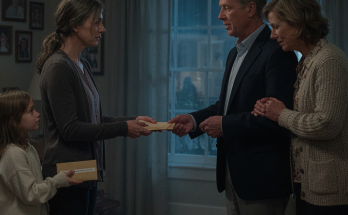
He slid a stack of papers toward me.
“Just a tax thing, babe,” he said. “Don’t even read it. It’s boring.”
I looked at the first page.There were legal terms I didn’t understand, numbers, references to property, and several paragraphs of dense language.“What am I signing?”Daniel laughed softly.
“You’re overthinking it. Our accountant said we need both signatures. Something about reducing our tax exposure.”
I frowned.“Why does it mention the house?”
He reached across the table and tapped the page with his finger.
“Because it’s related to the house. Just sign here.”He pointed to a line near the bottom.I hesitated.Daniel sighed.“Do you trust me?”That question changed everything.Because I did.At least, I thought I did.We had been married for eleven years.
We had bought our house together six years earlier. I had helped choose the kitchen cabinets, the flooring, the paint, even the ugly chandelier Daniel insisted looked “expensive.”
We had built a life there.
Our wedding photographs hung in the hallway.
Our children’s height measurements were penciled onto a doorframe.The backyard was where we celebrated birthdays.The house wasn’t just an asset.It was home.And Daniel was my husband.So I signed.
He kissed my forehead afterward.“See? Easy.”I smiled.I had no idea I had just signed away something that belonged to both of us.
Three months later, I came home early from work.
Daniel wasn’t expecting me.
The house was unusually quiet.
I walked into the bedroom and found an envelope sitting on the bed.
My name was on it.
I opened it.
The first page made my stomach drop.
It was a property transfer document.
I read the address.
Our address.
Then I read the new owner.
Margaret Reynolds.
Daniel’s mother.
I reread it.
Once.
Twice.
Five times.
My hands began shaking.
I grabbed my phone and called Daniel.
He didn’t answer.
I called again.
Nothing.
Then I opened the banking app.
The joint savings account showed a balance of $13.72.
I froze.
There had been $180,000 in that account.
Money we’d saved for years.
Emergency savings.
Investment money.
Money we had planned to use for renovations and our children’s future.
I checked the transaction history.
There were transfers.
Large transfers.
One after another.
$40,000.
$35,000.
$52,000.
$53,000.
Every dollar was gone.
My knees became weak.
I sat on the edge of the bed.
Then my phone rang.
Daniel.
I answered immediately.
“What did you do?”
Silence.
“What did you do to our house?”
Another silence.
Then he said quietly,
“I was going to tell you.”
“You transferred our house to your mother.”
“It was temporary.”
“You took $180,000.”
“It’s complicated.”
“No. It’s not.”
My voice cracked.
“You lied to me.”
Daniel exhaled.
“I’m filing for divorce.”
I couldn’t breathe.
“What?”
“I already spoke to a lawyer.”
The room seemed to tilt.
“You’re divorcing me?”
“I think it’s best.”
“And the house?”
“My mother owns it.”
“The money?”
“I moved it to protect it.”
“Protect it from what?”
He didn’t answer.
I realized then that the man I had married was no longer even pretending.
He wasn’t apologizing.
He wasn’t frightened.
He wasn’t asking me to forgive him.
He was simply telling me that he had planned my destruction.
“I’ll see you in court,” he said.
Then he hung up.
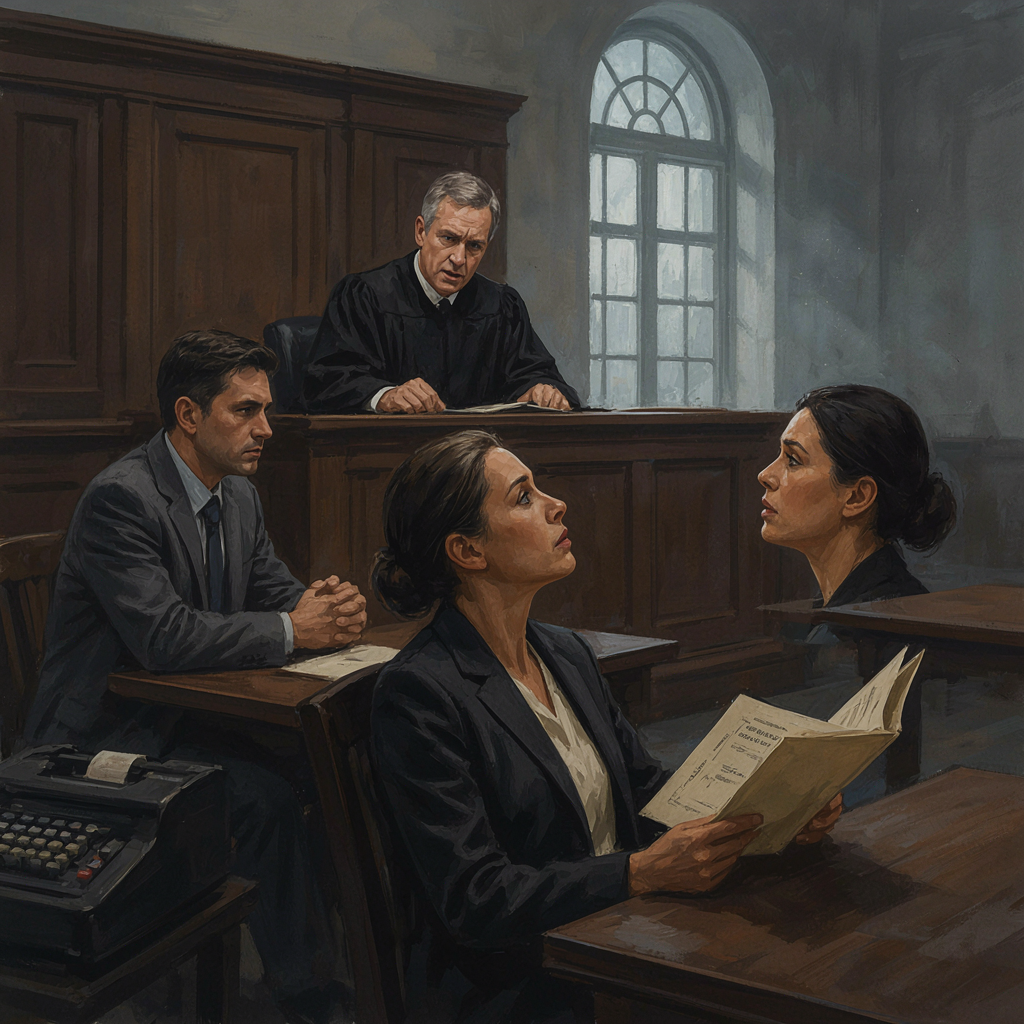
Two weeks later, I was sitting in a courtroom.
Daniel sat across from me with his lawyer.
His lawyer was a polished man named Victor Hale.
He had gray hair, an expensive watch, and the kind of smile that made me uncomfortable.
Daniel looked calm.
Almost confident.
I looked at my own hands.
I didn’t have a lawyer.
I couldn’t afford one.
Every time I tried to contact an attorney, I was asked for a retainer I simply didn’t have.
My savings were gone.
My credit cards were nearly maxed out.
And Daniel had already moved into a luxury apartment across town.
His lawyer stood.
“Your Honor, the financial circumstances are straightforward.”
He handed the judge a folder.
“My client owns no marital real estate. The property in question belongs to his mother.”
My heart pounded.
“That isn’t true,” I whispered.
Victor continued.
“The respondent also has no significant savings or liquid assets.”
He turned toward me.
Then he smiled.
“She has no assets. No home. No savings.”
I looked at Daniel.
He wouldn’t meet my eyes.
The judge examined the documents.
Then he looked at me.
“Mrs. Reynolds, do you have representation?”
I swallowed.
“No, Your Honor.”
The judge frowned.
“You understand that this is a serious proceeding?”
“Yes.”
“Do you have any documentation you wish the court to consider?”
I remembered the folder.
The folder my father had given me six months before he died.
I had almost forgotten about it.
Almost.
My father had been a lawyer.
He spent forty years dealing with contracts, property disputes, estate planning, and financial fraud.
Before he died, he gave me a brown leather folder.
He told me,
“Don’t open this unless you need it.”
I had asked him what was inside.
He only smiled.
“You’ll know.”
At the time, I thought it was something sentimental.
Maybe old photographs.
Maybe family documents.
Maybe his will.
I had carried it with me ever since.
That morning, when I left my apartment for court, I put it in my purse without knowing why.
Now I reached inside.
My fingers touched the leather.
I pulled it out.
Daniel finally looked at me.
His expression changed.
“What is that?”
I didn’t answer.
I placed the folder on the table.
The judge nodded.
“You may submit it.”
I opened it.
Inside was a notarized document.
Then another.
Then another.
At the top of the first page were three words:
Conditional Property Agreement.
I felt my heart stop.
Daniel’s lawyer stood abruptly.
“Your Honor, I object.”
The judge raised an eyebrow.
“You haven’t even seen the document.”
“I know enough to know it is irrelevant.”
The judge looked at him.
“Sit down, Mr. Hale.”
He sat.
I handed the document to the bailiff.
The judge began reading.
His expression slowly changed.
He read the first page.
Then the second.
Then the third.
The courtroom became completely silent.
Finally, the judge looked at Daniel.
“Mr. Reynolds.”
Daniel swallowed.
“Yes, Your Honor?”
“Did you sign this agreement?”
Daniel didn’t answer.
The judge held up the document.
“Did you sign this?”
Daniel looked at his lawyer.
Victor Hale leaned toward him and whispered something.
The judge’s voice hardened.
“Answer the question.”
Daniel finally said,
“Yes.”
The judge looked at me.
“Mrs. Reynolds, where did this come from?”
“My father.”
“When was it executed?”
“Six years ago.”
Daniel suddenly stood.
“Your Honor, I didn’t know she had that.”
The judge stared at him.
“That is not an answer.”
Victor stood.
“Your Honor, we need time to review this.”
“You’ll have time.”
The judge turned another page.
Then his eyes narrowed.
“Mr. Reynolds, this agreement appears to establish that the marital residence was purchased with funds originating from your wife’s separate inheritance.”
Daniel’s face went pale.
The room seemed to disappear around me.
My father had left me money when my grandmother died.
I had used most of it as the down payment on our house.
Daniel had always told people that we had bought the house together.
But the agreement my father prepared stated something different.
It stated that my contribution represented separate property and that any attempt to transfer the marital residence without my written consent and independent legal acknowledgment would be subject to challenge.
And there was more.
A handwritten note from my father.
I recognized his handwriting immediately.
It said:
If Daniel ever tries to separate you from the house or your financial interest in it, show this to the court.
My hands trembled.
The judge continued reading.
Then he reached the final page.
His expression became severe.
“Mr. Reynolds, you transferred the property to your mother three months ago?”
Daniel nodded.
“Yes, Your Honor.”
“And you did so after your wife signed a document you represented as a tax document?”
Daniel’s lawyer jumped up.
“Objection.”
“Sustained as to the characterization,” the judge said.
Then he looked at me.
“Mrs. Reynolds, do you have a copy of the document you signed?”
“Yes.”
I pulled it from the folder.
The judge compared it with the transfer paperwork.
Then he asked,
“Did anyone explain the legal effect of this document to you?”
“No.”
“Did you have independent counsel?”
“No.”
“Did your husband tell you it was a tax document?”
“Yes.”
The judge leaned back.
Then he looked directly at Daniel.
“Sir, you have a very serious problem.”
Daniel’s face had gone completely white.
But the judge wasn’t finished.
He ordered a temporary freeze on the disputed assets.
He also ordered Daniel to produce complete bank records.
Every transfer.
Every account.
Every transaction.
Every property-related document.
And then came the discovery that changed everything.
The $180,000 hadn’t simply disappeared.
It had been moved.
Daniel had transferred $75,000 to his mother.
$50,000 to a private investment account.
$30,000 to a company owned by his brother.
And $25,000 had been used as a down payment on a condominium.
A condominium Daniel had purchased two weeks before filing for divorce.
The title was in his name.
Not his mother’s.
Not his brother’s.
His.
The judge ordered the property disclosed.
Daniel’s lawyer tried to argue that the money was unrelated to the marriage.
But the bank records told a different story.
The transfers happened after Daniel had begun planning the divorce.
Emails showed that he had been communicating with his lawyer for months.
Before I signed the document.
Before he told me anything.
Before he moved the money.
He had planned it.
Every part of it.
And then investigators found something else.
A recording.
Daniel had forgotten that our home security system recorded audio in certain areas.
The recording captured a conversation between Daniel and his mother.
His mother asked,
“Are you sure she can’t take the house?”
Daniel answered,
“She signed everything.”
His mother laughed.
“And the money?”
“Gone.”
I sat in the courtroom listening to the recording.
I didn’t cry.
I couldn’t.
I just stared at the table.
Because there was something worse than discovering your husband betrayed you.
It was discovering that your husband had discussed your destruction with his mother as though your life were a business transaction.
The judge ordered an emergency hearing.
Daniel’s mother was subpoenaed.
She arrived with an attorney.
She claimed she believed the property transfer was legitimate.
But when the judge showed her the financial records, her story changed.
Then the judge asked one question.
“Why did you receive $75,000 from your son?”
She hesitated.
“For safekeeping.”
“Safekeeping for whom?”
She didn’t answer.
“For your son?”
Silence.
The judge looked at Daniel.
“Mr. Reynolds?”
Daniel finally admitted,
“It was to protect my assets.”
The judge shook his head.
“You mean marital assets.”
Daniel said nothing.
The court ultimately ruled that the property transfer was subject to reversal and that the financial transfers had to be accounted for.
The house couldn’t simply be handed to his mother.
The $180,000 wasn’t magically gone.
It was traceable.
And because Daniel had moved the money after deciding to divorce but before informing me, the court treated those transactions as highly relevant to the division of marital property.
But there was one more surprise.
My father hadn’t stopped with the agreement.
He had created a second document.
A letter addressed to any court that might one day hear our case.
I read it for the first time that night.
It explained exactly how my inheritance had been used to purchase the house.
It included copies of bank records from six years earlier.
It included the original cashier’s check.
It included the closing statement.
And it included a statement from the title company confirming that my separate funds had supplied the majority of the down payment.
My father had anticipated everything.
Not because he knew Daniel would betray me.
But because he knew people sometimes became different when money was involved.
He wanted me protected.
The divorce proceedings lasted nearly a year.
Daniel’s confidence disappeared.
His expensive lawyer stopped smiling.
His mother had to sell the condominium.
The $75,000 was recovered.
The investment account was frozen.
The $30,000 transferred to Daniel’s brother became part of the financial accounting.
And the house?
The court ordered the transfer to his mother reversed.
It was placed back into the marital estate for proper division, with my separate-property contribution recognized.
But I didn’t want the house anymore.
Not after everything that had happened there.
So I negotiated a settlement.
Daniel kept certain investments.
I kept the house.
He had to repay a significant portion of the money he had moved.
And because of the financial misconduct, the court ordered him to cover a substantial portion of my legal expenses once I obtained representation.
The day I signed the final settlement, I sat alone in my car outside the courthouse.
For the first time in months, I could breathe.
My phone rang.
It was Daniel.
I almost ignored it.
Instead, I answered.
“What?”
He was silent for several seconds.
Then he said,
“I never meant for it to go this far.”
I laughed.
Not because anything was funny.
Because the sentence was absurd.
“You transferred our home.”
“I was scared.”
“You stole $180,000.”
“I thought I was protecting myself.”
“You lied to me.”
“I thought we’d work it out.”
“You planned to destroy me.”
Silence.
Then he whispered,
“I loved you.”
I looked through my windshield at the courthouse.
“No,” I said.
“You loved what you thought you could take from me.”
He started crying.
I didn’t.
Because by then, I had already grieved the man I thought he was.
I hung up.
Three weeks later, I moved back into the house.
I repainted the kitchen.
I removed the chandelier Daniel loved.
I took down our wedding photographs.
I replaced the old doorframe where our children’s heights were marked with a new piece of wood.
Not because I wanted to erase the past.
Because I wanted to begin again.
One evening, I sat at the kitchen table.
The same table where Daniel had pushed the document toward me.
I placed my father’s brown leather folder beside a cup of tea.
I opened it.
On the inside cover was a note I had never noticed before.
It said:
My daughter, trust people—but never surrender your right to understand what you are signing. Love should never require blindness.
I ran my fingers across the handwriting.
Then I smiled.
My father had been gone for six months.
But somehow, when I needed him most, he had been sitting at that table with me.
I finally understood why he had told me,
“You’ll know when to open it.”
I had thought the folder was there to save my money.
It wasn’t.
It saved my future.
And it taught me the lesson Daniel never expected me to learn:
A signature isn’t proof of trust.
It’s proof that you agreed to something.
And from that day forward, I promised myself that I would never again sign anything simply because someone I loved told me not to read it.
Because sometimes the most dangerous words in a marriage aren’t,
“I don’t love you anymore.”
They’re:
“Don’t worry, babe. Just sign here.”