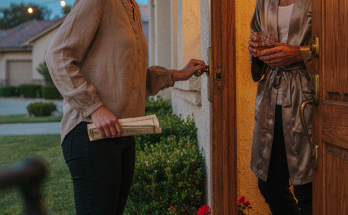
The first time I walked into the Hawthorne house, I was thirty-four years old, newly divorced, and trying to figure out how to keep my two children fed. The house sat on a quiet, tree-lined road in the Connecticut suburbs, tucked behind a pair of ancient maple trees whose branches arched over the long gravel driveway like welcoming arms. It wasn’t the biggest mansion in town, but it carried the kind of quiet wealth that didn’t need to announce itself. White clapboard walls. Black shutters. A wraparound porch where rocking chairs overlooked acres of perfectly kept gardens.
I’d answered an ad for a housekeeper.
The woman who interviewed me, Margaret Hawthorne, was polite but reserved.
“The position is every Tuesday and Friday,” she’d explained. “General cleaning. Laundry. Occasionally preparing lunch for my husband if I’m out.” Then she’d glanced toward the library. “My husband can be… particular .”That turned out to be an understatement .Walter Hawthorne hated dust. He hated fingerprints .He hated crooked picture frames .He even noticed if the books on his shelves were pushed back an inch farther than usual. The first time he inspected my work, he silently ran one finger across the top of a doorway. No dust.
He nodded once.
“Good.”
That single word was the closest thing to praise I’d receive for nearly five years.
People in town called Walter grumpy. Some called him impossible. Others simply crossed the street when they saw him coming. He rarely smiled. Never attended neighborhood barbecues. Returned Christmas cards with handwritten corrections if someone misspelled his middle initial.
But over fifteen years, I learned something. People often confuse quiet with cruelty. Walter wasn’t warm. He wasn’t affectionate. He certainly wasn’t easy. But he was fair. Every Christmas he handed me an envelope with a bonus. Every birthday he remembered my children’s names.
When my son Michael broke his wrist playing baseball, Walter asked exactly one question.
“Hospital bills covered?”
I admitted they weren’t.
The following Friday another envelope appeared beside the coffee maker.
Inside was enough cash to pay every bill.
No note.
No explanation.
When I thanked him, he waved a newspaper.
“You’re a good worker.”
That was the end of the conversation.
Margaret passed away in my eighth year working there.
Cancer.
Fast.
The house changed after that.
Walter stopped eating in the dining room.
Stopped tending his roses.
Stopped correcting my vacuum lines.
Sometimes I’d find him sitting alone in the library, staring at an old photograph of Margaret laughing beside the ocean.
He looked smaller somehow.
Lonelier.
One afternoon I quietly placed a bowl of homemade chicken soup beside him.
He looked at it.
“I didn’t ask for lunch.”
“I know.”
A long silence followed.
Then he picked up the spoon.
“It smells like Margaret’s.”
It was the longest sentence he’d ever spoken to me.
His children visited only on holidays.
Daniel, the oldest son, lived in Boston.
Rebecca lived in Manhattan.
Thomas was somewhere in California working in finance.
Whenever they visited, the house felt different.
Louder.
Colder.
They spoke about investments.
Taxes.
Real estate.
They rarely asked their father how he was feeling.
Walter usually escaped into the garden.
One Christmas I overheard Daniel whispering in the kitchen.
“We’ll probably sell after Dad’s gone.”
Rebecca nodded.
“None of us wants to deal with this old place.”
I looked toward the garden.
Walter stood outside trimming dead roses.
I wondered if he’d heard.
The last two years were difficult.
Parkinson’s stole his steady hands.
Then heart problems arrived.
Eventually a live-in nurse came during the evenings while I continued cleaning during the day.
Walter moved slower.
Talked less.
But every Friday before I left he’d still say the same thing.
“Thank you, Helen.”
He’d finally started using my name.
About three months before he died, he stopped me as I was dusting the library.
“Helen.”
“Yes?”
He reached into the drawer of his desk.
“I need you to promise something.”
I looked surprised.
“If my children tell you to throw away anything in this room…”
He paused.
“…don’t.”
“I don’t understand.”
“You will.”
Then he smiled.
Only the second time I’d ever seen him smile.
He passed away peacefully in early October.
Ninety-one years old.
The funeral was elegant.
Full of expensive flowers and expensive people.
Business partners.
Lawyers.
Neighbors who hadn’t visited him once during the previous decade.
I stood quietly in the back beside the gardener.
After the service Rebecca hugged me.
“Thank you for taking such good care of Dad.”
She sounded sincere.
I appreciated that.
Two weeks later they listed the estate.
Everything changed overnight.
Furniture received price tags.
Paintings disappeared into crates.
Auctioneers walked through every room making notes.
I spent my final week helping prepare the house for sale.
Every cabinet emptied.
Every closet sorted.
Fifteen years of memories packed into cardboard boxes.
It felt strangely heartbreaking.
On my last afternoon I vacuumed the empty library one final time.
The shelves stood bare.
The room echoed.
I rested my hand on Walter’s old reading chair.
“Goodbye.”
Rebecca met me at the front door.
She looked exhausted.
In her hand was a thick cream-colored envelope.
“A little something,” she said softly. “For all your years with us.”
I thanked her.
She hurried back inside before I could open it.
The envelope felt heavier than paper.
I rode the evening train toward New Haven.
Halfway home curiosity got the better of me.
Inside was a folded letter.
The handwriting stopped me cold.
Walter’s.
Careful.
Precise.
Still unmistakable.
Dear Helen,
If you’re reading this, then I’ve finally managed to leave this world without anyone arguing me back into it.
You have cleaned this home for fifteen years.
But that sentence doesn’t describe what you truly did.
You protected my dignity after I lost my wife.
You preserved this house when I no longer had the strength.
You treated me like a human being instead of a burden.
That deserves more than gratitude.
Behind the letter rested a small brass key.
Attached to it was a faded paper tag.
Safe Deposit Box 214.
First Connecticut Savings Bank.
My heart started pounding.
There was another folded document underneath.
It listed the bank.
The account number.
Walter’s signature.
And one sentence.
The contents belong to Helen Carter.
I barely slept that night.
The following morning I visited the bank.
The manager already seemed to know why I was there.
“You must be Ms. Carter.”
He smiled gently.
“Mr. Hawthorne left very specific instructions.”
After checking my identification, he escorted me into the vault.
The safe deposit box wasn’t large.
Maybe twelve inches long.
When he placed it on the table and left the room, my hands trembled.
Inside lay three items.
A leather journal.
An old velvet jewelry pouch.
A sealed envelope labeled LAST.
I opened the journal first.
Walter had been writing in it for nearly twelve years.
Not every day.
Just occasionally.
The entries surprised me.
Helen brought soup today.
She thinks I didn’t notice she fixed the broken porch step herself.
Saved me hiring someone.
She’ll never mention it.
Another entry.
Michael graduated college today.
She showed me photographs.
She cried because his father never called.
I pretended to read the newspaper so she wouldn’t feel embarrassed.
Then another.
The children believe kindness must always be loud.
Helen proves otherwise.
Page after page documented quiet moments I’d forgotten.
The day I shoveled his walkway before arriving because of an unexpected snowstorm.
The afternoon I’d sat with him after Margaret’s birthday because he looked unbearably lonely.
The evening I’d stayed three extra hours after the power outage without charging another cent.
He’d noticed everything.
Every single thing.
By the time I reached the final page, tears blurred the ink.
Some people spend their lives waiting to be seen.
Apparently I had been.
The velvet pouch held Margaret’s pearl necklace.
A handwritten note accompanied it.
Margaret wanted you to have these someday.
She often said they looked happier on you than in our safe.
Wear them.
Remember her laughter.
I covered my mouth.
Years earlier Margaret had once let me try them on while helping organize her jewelry.
We’d laughed like teenagers.
I’d forgotten that moment.
She hadn’t.
Neither had Walter.
Finally I opened the last envelope.
Inside was a certified check.
I stared.
Read the amount again.
Then a third time.
Five hundred thousand dollars.
Half a million.
My knees nearly gave out.
Attached was one final letter.
No servant should spend fifteen years helping preserve another family’s future without securing her own.
My children will inherit enough.
Money reveals character more than it changes it.
Use this to build the life you postponed while helping build ours.
Do one thing for me.
Never feel guilty.
You earned every penny.
— Walter
I sat in that little bank room for nearly an hour.
Not because of the money.
Because someone had quietly believed I mattered.
Predictably, the story didn’t end there.
Two weeks later Daniel called.
His voice sounded strained.
“Helen… Dad left you something?”
I answered honestly.
“Yes.”
“What exactly?”
“I don’t think that’s your business.”
Silence.
Then came the accusation.
“You manipulated him.”
I almost laughed.
After fifteen years, that hurt more than it should have.
A week later a lawyer contacted me.
The siblings were contesting the gift.
Claiming undue influence.
Fortunately Walter had anticipated everything.
His attorney produced years of documentation.
Medical evaluations proving Walter remained mentally competent.
Video recordings explaining every gift he’d planned.
One recording showed Walter sitting in his library.
He looked directly into the camera.
“If my children challenge what I’ve left Helen, tell them this.”
He leaned forward.
“They visited on holidays.”
“Helen showed up in snowstorms.”
“They remembered my birthday.”
“She remembered my humanity.”
“There is a difference.”
The lawsuit disappeared within a month.
I never bought a mansion.
Never quit working immediately.
Instead I paid off every debt.
Bought a modest home of my own.
Helped Michael start his engineering business.
Paid my daughter Emily’s graduate school tuition.
Created scholarships at the local vocational school for people entering housekeeping and custodial work.
Each scholarship carried no family name.
Just a simple title.
The Quiet Service Award.
One spring afternoon, almost three years later, I drove past the old Hawthorne house.
The new owners had repainted it blue.
The roses were blooming again.
Children played in the yard.
Life had moved on.
I parked across the street for a moment.
Around my neck hung Margaret’s pearls.
In my purse rested Walter’s journal, worn from rereading.
I smiled.
People often think wealth is measured by what someone leaves behind.
A bigger house.
More investments.
Expensive antiques.
Walter taught me something different.
Real wealth is leaving someone convinced they were valued.
That their unseen kindness mattered.
That the countless ordinary things they did every day weren’t invisible after all.
I started the car.
As I drove away, sunlight caught the old porch where I’d spent fifteen years sweeping leaves, washing windows, and polishing floors.
For the first time, I realized I had never simply cleaned that house.
I had cared for a life.
And in the quiet way only truly grateful people understand, that life had cared for mine in return.