The Friday I was supposed to pick up Emily, the air had that sticky late-afternoon heat that makes the inside of a car smell like old coffee and warm vinyl. I remember the sound of my blinker clicking at the stoplight, the paper custody schedule folded in the cup holder, and the little knot in my stomach I kept trying to call “traffic.”
Every other Friday, she ran out with her backpack half-zipped and asked what we were having for dinner before she even shut the door.
That Friday, she didn’t answer.
She climbed into the passenger seat quietly, eyes fixed on her sneakers.
“Hey, Em,” I said.
“Hi.”
Her voice sounded smaller than usual.
I glanced over and saw it.
A split lip.
Not huge. Not dramatic. Just a thin red line on the corner of her mouth.
“What happened there?”
She touched it instinctively.
“Oh. Nothing.”
Nothing.
The word should have bothered me more than it did.
Kids get hurt.
Kids fall.
Kids run into things.
At least that’s what I told myself.
“Bike accident?” I asked.
She nodded quickly.
“Yeah.”
I waited for the rest of the story.
There wasn’t one.
The silence settled between us as I pulled away from the curb.
I should have pressed harder.
I didn’t.
Because deep down, I didn’t want to know.
Emily was nine years old.
Smart.
Funny.
Obsessed with astronomy and chocolate ice cream.
After the divorce, her mother, Karen, got primary custody.
I got every other weekend and Wednesday dinners.
The arrangement wasn’t perfect, but it worked.
Or at least I convinced myself it did.
Karen had remarried two years earlier.
Her new husband, Rick, seemed harmless enough.
He wore polo shirts and expensive watches.
Always smiled too much.
Always shook hands too hard.
But he had a good job.
A nice house.
And according to Karen, he “adored” Emily.
I wanted to believe her.
Life was easier that way.
The signs had started months earlier.
Little things.
Emily stopped talking about home.
When I asked how school was, she’d answer.
When I asked about her mom, she’d answer.
When I asked about Rick, she’d change the subject.
Then came the canceled soccer games.
Emily loved soccer.
One weekend she casually mentioned she wasn’t playing anymore.
“Why not?”
Rick thought it was a waste of time.
That bothered me.
But not enough.
Another sign.
She stopped laughing.
Not completely.
Just less.
Like somebody had turned down the volume on her personality.
I noticed.
Then ignored it.
Because divorced parents become experts at explaining things away.
Maybe she was growing up.
Maybe she was stressed.
Maybe she was adjusting.
Maybe.
Maybe.
Maybe.
The most dangerous word in the world.
That night, after dinner, we sat on the couch watching a movie.
Halfway through, Emily flinched when I reached for the remote.
Not dramatically.
Just enough.
My hand froze.
“Emily.”
She stared at the television.
“Yeah?”
“Why did you do that?”
“What?”
“You flinched.”
“I didn’t.”
The answer came too fast.
Too practiced.
I muted the TV.
The room suddenly felt too quiet.
She kept staring forward.
I could hear the refrigerator humming in the kitchen.
A dog barking outside.
My own heartbeat.
Then I saw tears forming in her eyes.
Not falling.
Just gathering.
Waiting.
“Emily.”
Nothing.
“Sweetheart, look at me.”
Slowly, she turned.
And for the first time in months, I saw fear.
Real fear.
Not childhood anxiety.
Not nervousness.
Fear.
The kind adults aren’t supposed to put inside children.
My stomach dropped.
“Did someone hurt you?”
She immediately shook her head.
Too quickly.
Too forcefully.
“No.”
I waited.
She swallowed hard.
Then looked down at her hands.
And whispered five words that changed everything.
“Please don’t make me go.”
The world stopped.
I didn’t hear the refrigerator anymore.
Didn’t hear the dog.
Didn’t hear anything.
Just those five words.
Please don’t make me go.
Every excuse I’d made.
Every sign I’d ignored.
Every warning bell I’d silenced.
They all came crashing back at once.
“What do you mean?”
Her shoulders started shaking.
“I don’t want to go back.”
“Why?”
She said nothing.
“Emily.”
Silence.
Then tears.
Big, unstoppable tears.
The kind children cry when they’ve been holding everything inside for too long.
Finally she whispered:
“Rick gets angry.”
The next hour felt like a nightmare.
Not because Emily told me everything.
Because she didn’t.
Children rarely do.
Not all at once.
Instead, the truth came in fragments.
Rick yelled.
A lot.
Rick punished her.
Harshly.
Rick called her stupid.
Lazy.
Worthless.
Rick grabbed her arm hard enough to leave bruises.
Rick threw things.
Rick slammed doors.
Rick made her stand facing walls for hours.
And sometimes—
Sometimes—
He hit her.
Not every day.
Not every week.
Just enough to make her afraid.
Just enough to keep her quiet.
Just enough to leave no obvious evidence.
The split lip?
Not a bike accident.
He’d shoved her after she spilled milk.
She hit the counter.
My vision blurred.
I remember gripping the edge of the couch because I felt like I might collapse.
“Does your mom know?”
Emily’s silence answered before her words did.
“She says he’s just stressed.”
The sentence broke me.
Not because of Rick.
Because of Karen.
Because somewhere along the way, my ex-wife had stopped protecting our daughter.
That night Emily slept in my guest room.
I didn’t sleep at all.
I sat at the kitchen table until sunrise.
Looking through photographs.
Birthday parties.
School plays.
Family vacations.
All the moments I’d believed she was okay.
All the moments she wasn’t.
I kept asking myself the same question.
How did I miss it?
The answer was simple.
I didn’t miss it.
I ignored it.
Because accepting the truth would’ve required action.
Conflict.
Court.
Lawyers.
Fear.
I had chosen comfort over suspicion.
And Emily had paid the price.
Never again.
The next morning I called my attorney.
Then Child Protective Services.
Then the police.
Karen called twenty-three times.
I didn’t answer.
Finally, she showed up at my house.
Furious.
Demanding.
Terrified.
I stepped outside.
“You’re keeping my daughter from me.”
I stared at her.
“Our daughter.”
She folded her arms.
“Rick would never hurt her.”
“Emily says otherwise.”
Karen looked away.
Just for a second.
A tiny movement.
But it told me everything.
“You knew.”
“I didn’t know.”
“You knew.”
“He only lost his temper a few times.”
My chest tightened.
“A few times?”
“You don’t understand how stressful things have been.”
I laughed.
A harsh, ugly sound.
“Did you just defend him?”
Tears filled her eyes.
But I wasn’t interested anymore.
Because while she was making excuses, our daughter had been living in fear.
The investigation took months.
Long months.
Interviews.
Reports.
Therapists.
Court hearings.
Emily slowly revealed more.
Rick’s behavior had escalated over nearly a year.
The emotional abuse came first.
Then intimidation.
Then physical violence.
Always carefully controlled.
Always just enough.
Experts later explained something I wish I’d known earlier.
Abuse rarely starts with bruises.
It starts with control.
With fear.
With isolation.
By the time physical harm appears, the damage has often been building for months or years.
That realization haunted me.
Because every small sign I’d dismissed had been part of a larger picture.
Rick denied everything.
Of course he did.
Called Emily a liar.
Called me vindictive.
Claimed I was manipulating her.
But evidence has a way of surfacing.
Teachers remembered concerning comments.
Neighbors described shouting.
A counselor documented Emily’s fear.
Photographs showed bruises.
Medical records raised questions.
Piece by piece, the truth emerged.
And eventually, the lies ran out.
Karen left him.
Not immediately.
Not heroically.
Not in some dramatic movie moment.
It took time.
Too much time.
But eventually she left.
The guilt nearly destroyed her.
For months she couldn’t look me in the eye.
Honestly, I couldn’t blame her.
I was angry too.
But healing isn’t about deciding who deserves forgiveness.
It’s about deciding whether the child deserves peace.
Emily deserved peace.
So we focused on her.
Recovery wasn’t fast.
People love stories where trauma ends the moment the villain disappears.
Real life doesn’t work that way.
For a while, Emily jumped whenever someone raised their voice.
She apologized constantly.
For everything.
Even things that weren’t her fault.
If a glass tipped over, she’d panic.
If dinner burned, she’d panic.
If someone looked frustrated, she’d panic.
Fear had become her normal.
Teaching her she was safe took years.
Not weeks.
Years.
But little by little, she changed.
The laughter came back first.
Then confidence.
Then curiosity.
Then joy.
One day she joined a soccer team again.
Another day she stood up to a bully at school.
Another day she looked at me and said:
“You know, I don’t feel scared all the time anymore.”
I nearly cried.
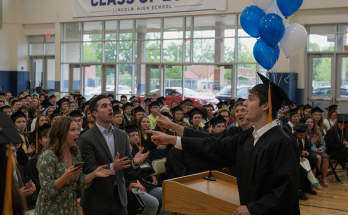
Five years later, Emily stood on a stage at her high school graduation.
Confident.
Strong.
Unapologetically herself.
The auditorium erupted with applause.
I watched her cross the stage and thought about that Friday afternoon.
The split lip.
The silence.
The fear in her eyes.
And those five words.
Please don’t make me go.
Sometimes people ask when I knew something was wrong.
They expect me to mention the bruise.
The flinch.
The tears.
But the truth is harder.
I knew long before that.
Not consciously.
Not clearly.
But somewhere inside me, I knew.
Every parent knows when something feels off.
The challenge isn’t noticing.
The challenge is listening.
Listening when the answer is inconvenient.
Listening when it threatens the life you’ve convinced yourself is stable.
Listening when the truth is terrifying.
Because children don’t always know how to ask for help.
Sometimes they whisper.
Sometimes they hint.
Sometimes they change.
Sometimes they grow quiet.
And sometimes they spend months waiting for an adult to finally see what has been right in front of them all along.
I wish I had listened sooner.
I wish I had asked harder questions.
I wish I had trusted my instincts.
But regret can only look backward.
Love has to move forward.
So I made a promise to Emily.
A promise I intend to keep for the rest of my life.
No matter how old she gets.
No matter where life takes her.
No matter what happens.
If she ever says she’s afraid—
I will listen.
The first time.