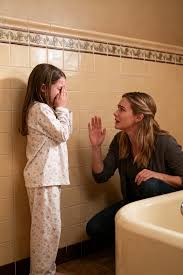
Sophie always ran to the bathroom the moment she came home from school.
Every single day.
The front door would slam, her sneakers would squeak across the hallway tile, and before I could even say hello, she’d yell, “Bathroom!” and disappear behind the locked door.
At first, I thought it was harmless.
Maybe she hated the sticky feeling of playground sweat. Maybe some girl at school had teased her about body odor. Ten-year-olds could be cruel in ways adults forgot.
Still, something about it bothered me.
It wasn’t normal kid behavior. It was urgent. Ritualistic.
She never missed a day.
One afternoon, I stood outside the bathroom holding two grilled cheese sandwiches while steam curled under the door.
“Sophie,” I called gently, “your food’s getting cold.”
“Just a minute!”
I heard frantic splashing.
Not relaxed bathing.
Scrubbing.
Hard scrubbing.
When she finally emerged twenty minutes later, her cheeks were pink from heat, and she smelled overwhelmingly of soap.
I smiled carefully. “You know, most kids come home starving.”
She shrugged without meeting my eyes. “I just like being clean.”
Then she sat at the table and quietly picked at her sandwich.
That night, I mentioned it to my husband Mark.
“She showers because she’s clean,” he joked from behind his laptop. “Sounds like a parenting win.”
But I couldn’t laugh.
Because lately Sophie had changed in other ways too.
She stopped asking to invite friends over.
She no longer begged to go to birthday parties.
And every morning before school, she complained of stomachaches.
“I think she’s anxious,” I said softly.
Mark sighed. “You worry too much.”
Maybe I did.
But mothers notice things.
Tiny things.
The way Sophie flinched when someone touched her shoulder.
The way she scrubbed her hands before dinner until her knuckles turned red.
The way her smile looked forced now.
A week later, I was cleaning the bathroom after Sophie had gone to bed when I noticed the drain was clogged again.
I grabbed a tissue and reached inside.
At first, I thought it was hair.
But when I pulled it out, my stomach dropped.
Tiny folded pieces of paper.
Dozens of them.
Wet.
Soggy.
Deliberately shoved deep into the drain.
My hands trembled as I unfolded the first one.
Ugly.
The second:
Nobody wants you here.
The third:
You smell disgusting.
My vision blurred.
More notes.
More handwriting.
Freak.
Crybaby.
Dirty pig.
One note had dark brown stains where the ink had bled through.
I realized with horror that Sophie had tried to destroy them in the bathwater.
Every day.
That’s why she rushed home.
Not to get clean.
To erase the evidence.
I sat on the bathroom floor shaking.
Something inside me snapped.
The next morning, I didn’t send Sophie to school.
I waited until Mark left for work, then sat beside her on the couch.
“Honey,” I said quietly, “I found the notes.”
Her entire body froze.
For a second she looked terrified—not sad, terrified.
As though she was in trouble.
“You read them?” she whispered.
I nodded.
Tears instantly filled her eyes.
“I tried to throw them away,” she cried. “I didn’t want you to know.”
“Oh, baby.”
She broke down so violently I had to pull her into my lap like she was five again.
Between sobs, the story poured out.
Three girls in her class had been tormenting her for months.
It started with whispers about her clothes.
Then comments about her hair.
Then they began dropping notes onto her desk when the teacher wasn’t looking.
At lunch, they’d move away when she sat down.
Sometimes they sprayed perfume after she walked by and laughed loudly.
“She smells weird.”
“She’s gross.”
The worst part?
Her teacher knew the girls were “mean,” but brushed it off as “normal friendship drama.”
So Sophie stayed quiet.
Every day she came home feeling filthy from their words.
Every day she took a bath trying to wash the feeling away.
I held her so tightly my arms hurt.
And I felt fury unlike anything I’d known in my life.
Not because kids were cruel.
Kids can be cruel.
But because my daughter had been drowning in pain while the adults around her ignored it.
By noon, I was sitting in the principal’s office.
The folded notes sat spread across the desk like evidence in a criminal case.
The principal’s face turned pale as she read them.
“This is serious,” she admitted.
“You think?” I snapped.
The teacher was called in next.
At first she tried minimizing it.
“Girls this age can be emotional—”
“No,” I interrupted coldly. “This is sustained bullying. My daughter has been bathing every day to scrub off the humiliation your classroom allowed.”
Silence.
The teacher looked stunned.
Good.
She should’ve been.
I demanded immediate action.
Parent meetings.
Classroom monitoring.
Counseling support.
Consequences.
And for the first time in months, I stopped worrying about seeming “too emotional.”
Because protecting your child is never overreacting.
That evening, Sophie sat beside me on the couch under a blanket.
Quiet.
Exhausted.
“Are you mad at me?” she asked suddenly.
I stared at her in disbelief.
“Mad at you?”
“For hiding it.”
My heart shattered.
I cupped her face gently.
“Sophie, listen to me very carefully. What those girls did is not your fault. And you never have to earn love by suffering quietly.”
Tears slid down her cheeks again.
“I didn’t want to make trouble.”
“Oh sweetheart,” I whispered, pulling her close, “you are never the trouble.”
She cried against my shoulder for a long time.
And that night, for the first time in months, she didn’t run to the bathroom.
Instead, she stayed beside me in the living room while we watched an old baking show and shared popcorn under the blanket.
Just before bed, she looked up at me hesitantly.
“Mom?”
“Yes?”
“If kids say mean things long enough… can they make them true?”
I felt tears sting my own eyes.
“No,” I said firmly. “Cruel words only tell you who the bully is. Never who you are.”
She leaned against me quietly.
And in that moment, I made myself a promise.
I would never again ignore the small signs.
Not the silence.
Not the rituals.
Not the forced smiles.
Because sometimes children don’t know how to say, “I’m hurting.”
Sometimes they try to wash the pain down the drain instead.