Specialized Treatment and Management Strategies
Managing these complex conditions requires a multi-modality approach tailored by a dermatologist.
A. Initial Clearance: Professional Extraction
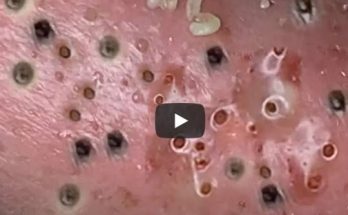
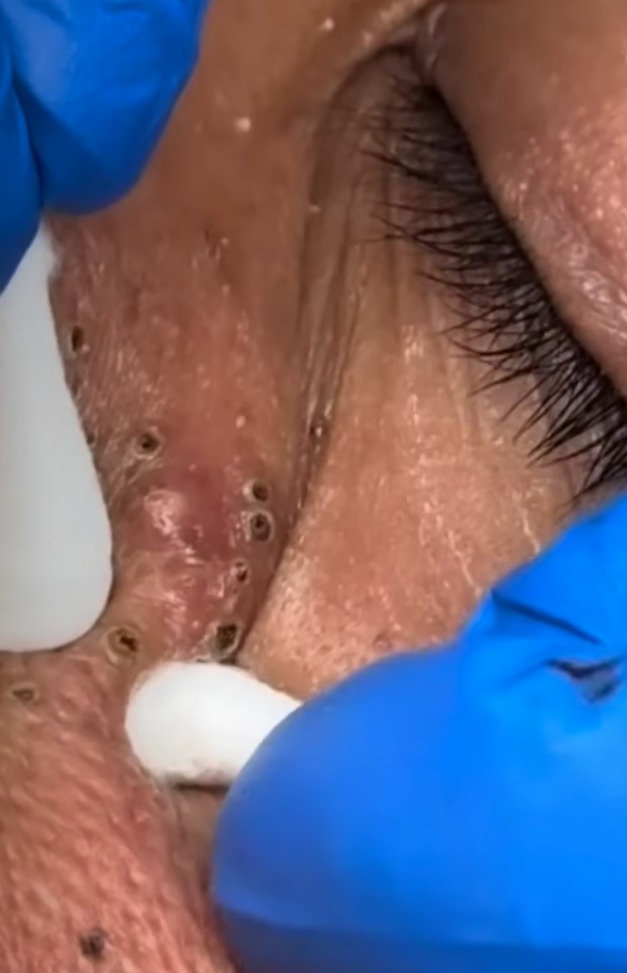
As seen in Images 2 and 4, manual extraction is essential for removing the impacted plugs in both severe comedonal acne and NC.
-
Safety: The procedure must be performed by a professional under sterile conditions using tools like comedone extractors to prevent infection, minimize trauma, and avoid the devastating complication of forcing the plug deeper and causing a severe nodule or cyst.
-
Inflammatory Relief: For deep nodules/cysts (Images 1, 6), a rapid solution is often an intralesional corticosteroid injection to quell the inflammation immediately and limit tissue destruction and scarring.
B. Long-Term Medical Prevention
The key to preventing recurrence is normalizing the follicular environment:
-
Topical Retinoids: (e.g., Tretinoin, Adapalene) These are the gold standard for comedonal prevention. They work by normalizing the shedding of skin cells, effectively stopping the formation of the microcomedone at its earliest stage.
-
Oral Isotretinoin: For chronic, severe, nodulocystic acne, this powerful drug is highly effective as it causes a dramatic, permanent reduction in the size and activity of the sebaceous glands.
C. Treatments for Nevus Comedonicus
The structural defect in NC often requires advanced procedures:
-
Surgical Excision: Complete removal of smaller patches of the affected skin is often curative.
-
Ablative Laser Therapy: Lasers, such as the $\text{CO}_2$ laser, can be used to precisely destroy the abnormal follicular units and resurface the affected area.
V. Addressing Scarring
Given the depth of inflammation (Image 6) and follicular stretching (Image 5), the risk of scarring is extremely high. Once the active disease is controlled, post-acne treatments are vital:
-
Microneedling
-
Laser Resurfacing
-
Chemical Peels
These procedures help rebuild damaged collagen and improve the texture of atrophic scars and the appearance of post-inflammatory hyperpigmentation (PIH). The complex conditions shown in the images warrant immediate consultation with a board-certified dermatologist for an accurate diagnosis and an aggressive, tailored treatment plan.