The cold in Connecticut doesn’t just chill your skin; it has a way of seeping into your marrow, especially when you are standing on the wrong side of a wrought-iron gate. But that afternoon, the cold wasn’t just in the air of the impending Nor’easter—it was baked into the very foundation of the Miller Estate. I was eight months pregnant, my center of gravity distorted, my lower back screaming in a persistent, dull agony as I dragged a cast-iron patio chair across the slick terrace stones. The wind howled, a vicious, biting sound that whipped my soaked hair across my face. My hands were raw, the knuckles split and bleeding from the abrasive chill and the relentless labor.
I am a Miller, I thought bitterly, wiping a mixture of freezing rain and sweat from my brow. But in this house, I am nothing more than the help.
Through the expansive floor-to-ceiling glass of the conservatory, the world was entirely different. It was a world of ambient climate control, soft jazz, and the clinking of crystal. I could see my sister, Cassandra Miller—Sandy to her friends, the “Golden Child” to our parents—lounging on a plush, cream-colored sofa. She was sipping a vintage Bordeaux, laughing at something my mother, Beatrice Miller, was reading from a glossy magazine. Sandy had just closed a minor PR deal for her boutique agency, an accomplishment that had warranted a catered dinner and a new diamond tennis bracelet. I, on the other hand, was currently hauling furniture because the estate staff had been given the day off before the storm hit, and Beatrice found the sight of wind-blown cushions “aesthetically offensive.”
I pushed the heavy glass door open, gasping as the warm air hit my frozen lungs. I dragged the final chair inside, my boots leaving wet, muddy tracks on the pristine marble floor.
“You’re getting mud on the rug, Elena,” Beatrice snapped. She didn’t even lift her gaze from the pages of Vogue. Her voice was a perfectly calibrated instrument of disdain, sharp and devoid of any maternal warmth.
“I’m having contractions, Mom,” I gasped, leaning heavily against the back of the iron chair. A sharp, tightening pain rolled across my abdomen, stealing the breath from my lungs. “I need to sit down.”
Sandy sighed, a theatrical sound of sheer exhaustion at my existence. She set her wine glass down and walked over, her designer heels clicking sharply against the stone like a metronome ticking down my remaining dignity. She leaned in. She smelled of Maison Francis Kurkdjian perfume and pure, unadulterated malice.
“You’re not tired, you’re just lazy,” Sandy sneered, her perfectly manicured finger poking hard into my shoulder. “Just like that ‘gardener’ you married. You thought getting knocked up would get you a piece of the inheritance? You thought playing the pathetic, pregnant victim would force Daddy to open his wallet? You’re just a breeding ground for another loser.”
I swallowed the bile rising in my throat. I looked past her, out the glass, toward the sprawling, manicured grounds. Through the sheets of freezing rain, I could see my husband, Julian. He was wearing a worn, canvas work jacket, calmly and methodically trimming the rhododendron hedges despite the violent weather. My parents treated him as a “charity case,” a low-life they only tolerated on the property to keep me under their thumb, constantly reminding me of how far I had fallen.
But as I watched him, Julian stopped. He slowly lowered the shears. He looked up toward the house, straight through the rain and the glass, and locked eyes with me. For a fleeting second, his eyes—usually so quiet, so carefully submissive around my family—flashed with a cold, terrifyingly predatory light. It was a look of calculated violence, something so alien to the gentle man who rubbed my swollen feet every night that it sent a shiver down my spine that had nothing to do with the winter storm.
Before I could process what I had just seen, the first massive crack of thunder shook the foundation of the mansion. The conservatory doors swung open, and my father, Arthur Miller, strode into the room. He was a man who wore his wealth like a weapon, his tailored suit immaculate even on a Sunday. In his hand, he held a thick, ivory-papered legal document.
He looked at me, a cruel, satisfied smile spreading across his face—a smile that told me the nightmare I had been living was only just beginning.
The Breaking Point in the Mud
“Sign it, Elena,” Arthur bellowed, his voice booming over the roar of the storm outside. He shoved the heavy stack of papers onto the glass coffee table, tapping a gold Montblanc pen against the signature line.
I stared at the document, the dense legalese blurring together. It was a complete surrender. An annulment of my trust fund, a severance of all familial ties, and, hidden in the clauses, a waiving of my future child’s right to ever claim the Miller name or estate.
“I… I don’t understand,” I stammered, wrapping my arms protectively around my swollen belly. Another contraction hit, harder this time, a searing band of iron tightening around my waist.
“It’s quite simple,” Arthur sneered, stepping closer, his imposing figure casting a long, dark shadow over me. “You made your bed in the dirt with that landscaper. We will not have a ‘gardener’s brat’ contaminating our lineage or laying claim to what I have built. Sign the papers, take the paltry severance check, and leave my property.”
“No,” the word slipped out before I could stop it. It was barely a whisper, but in the echoing silence of the conservatory, it sounded like a gunshot.
I won’t let you erase my child, I thought, a sudden, desperate fire igniting in my chest. I won’t let you treat us like garbage to be swept away.
“Excuse me?” Beatrice stood up, dropping her magazine. The mask of wealthy indifference shattered, revealing the ugly, jagged resentment beneath.
“I said no,” I repeated, my voice shaking but louder this time. “I’m not signing away my child’s future just so you and Sandy can pretend I don’t exist.”
The room exploded. Beatrice lunged forward, her manicured hands turning into claws as she grabbed my upper arm. Her grip was startlingly strong, her nails digging into my flesh through my wet sweater. “Then get out!” she shrieked, hauling me toward the grand entrance hall. “If you love the mud so much, go live in it with your husband!”
“Mom, stop! Please, you’re hurting me!” I cried out, stumbling over my own feet as she dragged me across the marble.
Arthur didn’t intervene. He merely watched with detached disgust. Sandy followed close behind, her face twisted into a grotesque mask of triumph.
Beatrice reached the heavy, double oak front doors. With a grunt of exertion, she yanked them open. A wall of freezing rain and howling wind blasted into the foyer, soaking the antique rugs instantly. With a final, violent shove, she pushed me.
I lost my footing on the wet threshold. I tumbled forward, falling hard onto my knees on the unforgiving stone of the front porch. The impact sent a shockwave of agony straight up my spine. I gasped, unable to draw breath as the freezing rain immediately soaked through my clothes, chilling me to the bone.
Sandy stepped out onto the threshold, the wind whipping her perfectly styled hair around her face. She stood towering over me, looking down with eyes devoid of a single shred of humanity. It was pure, unadulterated hatred.
“You think you’re a mother?” Sandy sneered, her voice cutting through the thunder. “You’re just a vessel for a parasite.”
With a sudden, vicious motion, she drew her leg back. Her heavy, leather designer boot swung forward in a brutal arc. It connected solidly with the side of my eight-month-pregnant stomach.
The sound I made wasn’t human. It was a ragged, tearing scream drawn from the deepest well of primal terror. I collapsed completely into the freezing mud of the driveway, curling into a fetal position, my arms desperately trying to shield my fractured womb. A sharp, white-hot agony flared in my abdomen, so intense it blinded me.
“Please…” I choked out, tasting mud and rain. “The baby… please…”
“Once that parasite in your womb dies, you’ll be utterly useless,” Sandy spat. She turned on her heel, stepped back inside, and slammed the heavy oak door shut. The deadbolt engaged with a heavy, metallic clack.
I lay there in the dirt, the cold soaking into my very bones. And then, beneath the freezing rain, I felt a terrifying, sickening warmth spreading rapidly between my thighs.
Blood.
My vision began to strobe, the edges of the world turning dark and fuzzy. The pain was pulling me under, drowning me in a sea of agony. But just as my eyes fluttered shut, just as I prepared to surrender to the blackness, a vibration rattled the muddy gravel beneath my cheek. It wasn’t thunder. It was the low, synchronized, terrifying hum of multiple high-performance engines tearing up the driveway, loud enough to drown out the storm.
The Arrival of the Shadow King
I couldn’t move. I could only watch through half-open, rain-blurred eyes as the world around me suddenly shifted on its axis.
Through the torrential downpour, they emerged like beasts from the deep. Ten identical, pitch-black Cadillac Escalades tore across my father’s pristine, manicured front lawn, completely ignoring the paved circular driveway. The heavy tires ripped deep trenches into the expensive turf, throwing arcs of mud into the air. They screeched to a halt in a perfectly coordinated, tactical phalanx, completely encircling the patch of mud where I lay bleeding.
The doors flew open in unison. Dozens of men clad in dark, tailored tactical suits and earpieces poured out into the storm. They moved with terrifying efficiency, their hands resting near their waistbands, their eyes scanning the perimeter. But none of them moved toward me. They stood like statues in the rain, waiting.
Then, the rear door of the lead Escalade, the one parked closest to my head, swung open.
A heavy, leather-soled shoe stepped out into the mud. It wasn’t a canvas work boot.
I forced my head up, my vision swimming. Julian stepped out into the raging storm. But it wasn’t the man I had lived with in our tiny, drafty apartment above the garage. The frayed canvas jacket was gone. The submissive slump of his shoulders was gone. He was wearing a bespoke charcoal suit that likely cost more than my parents’ luxury cars. He stood tall, his posture radiating an absolute, suffocating authority that made the air around him feel thin.
He didn’t flinch at the freezing rain soaking his expensive clothes. His eyes, fixed entirely on me, were no longer dull. They were a blazing, glacial blue—the eyes of an apex predator that had just found its mate bleeding in the snow.
He strode through the mud, dropping to his knees beside me, ignoring the blood and dirt ruining his trousers. He slid his strong arms beneath my back and my knees, scooping me up with a desperate tenderness that finally broke the dam of my tears. I sobbed, burying my face into the wet lapel of his suit.
“I’ve got you, El,” he whispered, pressing his lips to my freezing forehead. His voice was no longer the soft, gentle tone I knew; it was like cracking ice, vibrating with a suppressed, lethal fury. “I’m so sorry I let it go this far.”
“Julian…” I gasped, another wave of pain ripping through me. “The baby… they…”
“I know. I know.” His jaw locked, a muscle twitching in his cheek.
At that exact moment, a black sedan adorned with the official county seals screeched past the limousines, nearly sliding off the ruined grass. The doors burst open, and Mayor Henderson—the most powerful political figure in the county, a man who regularly dined at my father’s table—scrambled out. He didn’t even glance toward the grand windows of the mansion where I knew my parents and sister were now standing, watching in absolute, horrified confusion.
The Mayor ran through the mud, stopping exactly five feet away from Julian. To my utter shock, this proud, arrogant man bowed his head so low he was nearly doubled over in the rain.
“Mr. Vance,” Mayor Henderson stammers, his voice trembling so violently I could hear it over the thunder. “We… we had no idea you were operating within this jurisdiction. The local precinct is at your disposal. Please, sir, tell us how to assist.”
Mr. Vance. The name echoed in my fading consciousness. Not Julian the gardener. Julian Vance. Vance Global. The invisible titan. The hedge fund phantom who bought and sold countries.
Julian didn’t even look at the Mayor. He simply nodded toward one of the Escalades, where a fully equipped medical trauma team was already rushing out, rolling a stretcher through the mud.
Julian gently laid me onto the pristine white sheets of the gurney, holding my hand as the paramedics instantly began hooking up IVs and pressing monitors to my chest. He kissed my knuckles, his eyes promising me I would survive.
Then, Julian slowly turned his back to me. He faced the towering stone facade of the Miller mansion. He slowly lifted his left arm and tapped a sequence into the face of his matte-black titanium watch.
A small, single red light on the dial began to pulse like a digital heartbeat.
The Sound of Zero
I lay on the stretcher, stabilized but tethered to consciousness by a thread of sheer adrenaline. From the open doors of the medical transport, I had a front-row seat to the apocalypse.
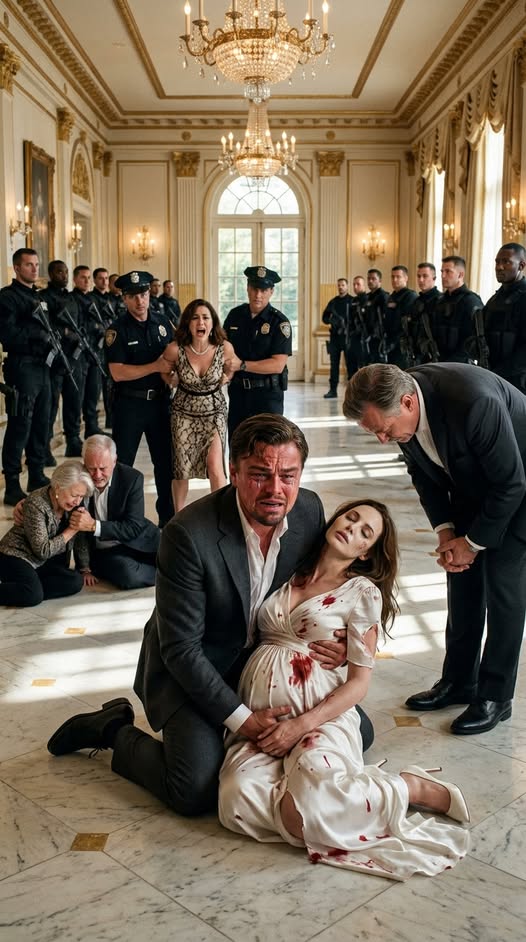
Julian didn’t walk to the front door; he marched. His tactical security team fell in flawlessly behind him, a wedge of silent, unstoppable force. They didn’t bother checking if the heavy oak doors were unlocked. The two lead guards simply raised their boots and kicked. The impact sounded like a bomb going off. The thick oak splintered, the reinforced deadbolt tearing cleanly out of the doorframe, and the massive panes of decorative glass shattered into a million pieces across the foyer.
Julian stepped over the broken glass and into the grand entryway, tracking mud across the Persian rugs my mother prized above human life.
Arthur and Beatrice stood near the base of the sweeping spiral staircase, their faces pale, their eyes wide with a terror they had never been forced to experience. Sandy was cowering behind our father, her hands clutching his jacket.
“Julian? What… what is the meaning of this circus?” Arthur tried to bluster, puffing out his chest, attempting to summon his usual arrogant authority. But his voice cracked, thin and reedy. “You’re destroying my property! I’ll have you arrested for…”
Julian held up a single finger. The silence that fell over the room was heavier than the storm outside.
“You have thirty seconds of relevance left,” Julian stated. His voice wasn’t a yell; it was a quiet, absolute fact.
On the far wall of the foyer, the massive, custom smart-display that Arthur used to obsessively track the family’s global stock portfolio suddenly chimed. The screen flickered violently. The numbers—tens of millions of dollars spread across mutual funds, offshore accounts, and corporate holdings—suddenly stopped tracking the market.
They started spinning backward. Fast.
It looked like a malfunctioning slot machine. Hundreds of thousands dropping off by the second.
“My accounts!” Beatrice shrieked, clawing her diamond-encrusted phone from her pocket. She frantically tapped the screen, her breathing turning into ragged gasps. “It’s all… the banking app… it’s saying ‘Balance: 0.00’! Arthur, do something!”
Arthur pulled his own phone, his hands shaking so badly he dropped it. “The trust… the offshore lines of credit… they’re gone. Evaporated. How?” He looked at Julian, his arrogant facade crumbling into dust. “Who are you?”
Julian ignored him. He stepped forward, moving smoothly around the shattered wood, and walked directly toward Sandy. She tried to press herself into the wall, her eyes wide, darting around like a trapped rat.
Julian leaned in close. The room was so quiet I could hear the rain hitting the marble floor.
“You called my heir a parasite,” Julian whispered. The words carried a localized, chilling gravity. “My son is a Vance. He will inherit the earth. You, however, are a localized infection. And I am the cure.”
Sandy whimpered, a pathetic, high-pitched sound.
Julian stood up straight and looked at the lead head of his security detail.
“Seal the gates. Freeze all localized assets,” Julian commanded, his voice ringing with finality. “This property, the vehicles, the contents of the safe—they are now seized assets of Vance Global, executed under the hostile takeover clause of their defaulted shell company debt.”
He looked back at my parents, who were now clinging to each other, a portrait of utter ruin.
“Throw them out,” Julian ordered quietly. “No coats. No shoes. Just the clothes they used to kick my wife.”
The security guards moved with ruthless efficiency. They grabbed Arthur, Beatrice, and Sandy by their collars and belts, dragging them toward the shattered doorway. The Millers screamed, kicking and thrashing, demanding to call their lawyers, demanding to call the police. But Mayor Henderson was standing right outside, actively looking the other way.
As they were violently thrown down the stone steps and into the freezing mud—right onto the exact spot where my blood was still washing away in the rain—Julian’s phone buzzed in his pocket.
He pulled it out, answering it on the first ring. I saw his broad shoulders instantly tense.
“Speak,” Julian commanded.
It was the lead surgeon from the medical transport unit beside me. He had been monitoring my vitals on a tablet. “Mr. Vance…” the surgeon’s voice echoed through the earpiece. “Her blood pressure is crashing. The placental abruption is severe. You need to get in here. Now.”
Julian dropped the phone. The King of the world vanished, and my terrified husband sprinted toward the ambulance.
Legacy of the Storm
Three weeks later.
The light filtering through the floor-to-ceiling windows of the private medical wing at the Vance Global Estate was warm, golden, and infinitely gentle. The air smelled of fresh lilies and sterile linen. I sat in a plush, velvet armchair, a cashmere blanket draped over my knees.
In my arms, wrapped in a soft blue swaddle, was a miracle. A baby boy. He was small, having arrived a month early in a chaotic storm of surgery and fear, but he was breathing. He was healthy. He was perfect.
Julian sat on the floor at my feet, his elbows resting on my knees. He wasn’t wearing a suit today, just a soft grey sweater. He looked up at me with the exact same quiet, profound devotion he had possessed when he was pulling weeds in my father’s garden. The empire he controlled didn’t matter in this room.
He gently stroked the baby’s cheek with a single, calloused finger. Then, he picked up a sleek black tablet from the side table and handed it to me.
“They’re at a county halfway house in New Jersey,” Julian said quietly, his voice a low rumble.
I looked at the screen. It was a high-resolution surveillance photo. It showed a line of people standing outside a brick building in the freezing sleet. Near the back of the line was a woman. Her hair was matted and unwashed. She was wearing an oversized, donated men’s coat over a tattered, muddy designer dress. Her face was hollow, haggard, and aged a decade in twenty-one days.
It was Sandy.
There was no “Golden Child” anymore. There was only a broken woman staring blankly at the pavement, perhaps finally realizing that the sister she had abused and kicked into the mud was the only person in her life who had ever truly loved her.
I stared at the photograph for a long time. I expected to feel a surge of vindictive joy, a thrill of righteous revenge. But as I looked at the ruin of my former abusers, I felt nothing. Just a profound, echoing, empty silence.
I handed the tablet back to Julian and looked down at my sleeping son. “They aren’t my family, Julian,” I whispered, pressing a kiss to the top of my baby’s head. “They were just people I used to know.”
Julian took the tablet, his jaw tightening slightly. “They’re being sued by the state for the medical costs of your emergency delivery,” he added, his tone shifting back to the cold, calculating architect of their demise. “The debt will follow them for three generations. They will never own a piece of gum, rent an apartment, or hold a bank account without my corporate algorithms flagging and garnishing it.”
It was a total, systematic annihilation.
Suddenly, there was a soft knock on the heavy wooden door. My private nurse, a kind woman named Sarah, stepped into the room. She looked unusually pale, wringing her hands nervously.
“Mrs. Vance… I apologize for interrupting,” she stammered. “But security at the outer gate just called up. There’s a woman there. She says she’s your mother.” Sarah swallowed hard. “She… she’s holding a blood-stained envelope. She says it belongs to you.”
The room went dead silent.
Six months later.
The grand ballroom of the Pierre Hotel was a sea of shimmering silk, bespoke tuxedos, and the gentle hum of unimaginable wealth. The inaugural gala for the Vance Foundation for At-Risk Mothers was the philanthropic event of the decade. I walked through the crowd, radiant in a midnight-blue gown, navigating the billionaires and politicians with a grace I never knew I possessed. I wasn’t just the wife of a titan anymore; I was a power in my own right, directing billions to ensure no woman ever had to feel as helpless as I had in that mud.
Later in the evening, I stepped out onto the heavily guarded terrace for some air. I looked down at the street level, far beyond the velvet ropes and the phalanx of Vance Global security.
Standing beneath a flickering streetlight, shivering in the autumn chill, a ghost watched the party. Beatrice Miller. She looked twenty years older, her posture permanently stooped. She was clutching the iron security fence, trying desperately to catch my eye through the crowd.
I stopped. I looked down at the woman who had birthed me, the woman who had quite literally thrown me out to die in a freezing storm to protect her own vanity. My heart didn’t race. My palms didn’t sweat. I was untouchable.
I simply raised my hand and caught the eye of the lead security director standing nearby. I gave a single, almost imperceptible nod.
“Give her a hot meal voucher and a bus ticket out of the borough,” I instructed, my voice calm, level, and entirely devoid of emotion. “But if she speaks my name aloud, call the police and have her arrested for trespassing.”
I turned my back on her and walked inside.
Julian was waiting for me near the grand staircase. He was holding our son, who was now a robust, laughing infant. The boy was giggling, his tiny fingers reaching out to grab the matte-black titanium watch on Julian’s left wrist—the exact same watch that had timed the absolute destruction of the Miller empire.
Julian smiled, catching our son’s hand and kissing the tiny knuckles. He looked up as I approached.
“He has your eyes,” Julian whispered, wrapping his free arm tightly around my waist, pulling me against his chest.
“And he has your heart,” I replied, leaning my head against his shoulder. I looked at my beautiful boy. “He’ll never know what it’s like to be unwanted. He’ll never know the cold. He’ll never know what it’s like to be called a parasite.”
We stood there together, looking out over the glittering skyline of the city we now essentially owned. It was a beautiful, terrifying world, built solidly on the ruins of people who had mistakenly believed they were untouchable.
As we turned to leave the ballroom and head up to the penthouse, Julian’s phone gave a sharp, encrypted ping.
He pulled it from his pocket. I saw his brow furrow, his thumb swiping across the screen to unlock a secure message. I leaned over his arm, reading the glowing green text sent from an unknown, untraceable source:
“You think the Millers were the ones pulling the strings on the trust fund default? You’re blind, Vance. Check the sub-basement servers of the old estate. The real game hasn’t even started.”
I looked up at Julian. I saw his jaw tighten, that familiar, cold predatory light reigniting in his glacial blue eyes. A shiver of anticipation ran down my spine. I realized then that while one storm had finally ended, another, much darker tempest was already gathering on the horizon.
And this time, I wouldn’t be the one bleeding in the mud. I’d be the one leading the charge.
If you want more stories like this, or if you’d like to share your thoughts about what you would have done in my situation, I’d love to hear from you. Your perspective helps these stories reach more people, so don’t be shy about commenting or sharing.