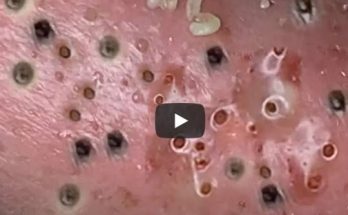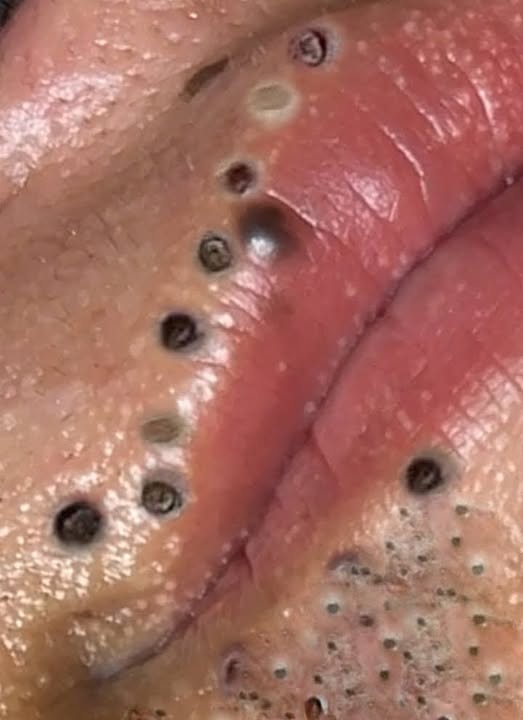
The provided image presents a highly magnified and concerning view of a localized, severe skin condition, prominently featuring a dense cluster of open comedones (blackheads). The unique anatomical location and the severity of the congestion warrant a detailed analysis of the underlying causes, the specific nature of these lesions, and the critical need for professional intervention.
The Visual Diagnosis: Identifying the Severe Lesions
The photograph captures an intensely affected area where the skin folds, possibly around the ear, lip, or another crevice of the body, indicating a predisposition for oil and dead skin cell accumulation. Key observations include:
-
Dense Comedonal Clusters: The most striking feature is the high concentration of dark, prominent lesions embedded deep within the pores. These are classic blackheads, formed by the oxidation of a plug made of trapped sebum and keratin (dead skin cells) at the pore opening.
-
Inflammatory Changes: The surrounding skin exhibits significant erythema (redness), particularly along the fold. This indicates active inflammation, suggesting that the clogged pores are either irritated, infected by bacteria, or have ruptured beneath the skin surface.
-
Presence of Other Lesions: Scattered among the large blackheads are smaller, whitish-yellowish bumps. These may represent closed comedones (whiteheads), where the pore remains closed, or small cysts/papules indicative of a more advanced, inflammatory acne process.
-
Deep Seated Plugs: The size and darkness of the blackheads suggest a chronicity and depth to the follicular plugs, making them resistant to simple over-the-counter treatments.
🦠 Pathophysiology: Why Congestion Occurs in Crevices
The severity seen in this image is often a result of a combination of systemic and environmental factors, with the location playing a critical role:
-
Increased Sebum Secretion: Acne-prone skin inherently produces more sebum. In certain anatomical folds, the sebum can be physically trapped, accelerating the blockage process.
-
Impaired Keratin Shedding: In acne-prone individuals, the process of dead skin cell (keratinocyte) shedding within the hair follicle is often abnormal. The sticky cells fail to exit the pore, mixing with sebum to form a microcomedone.
-
Anatomical Trapping and Occlusion: Skin folds and crevices are areas prone to occlusion (blockage) from:
-
External Pressure: Clothing, helmets, headbands, or repeated rubbing can push debris back into the pores.
-
Moisture and Heat: Trapped sweat and moisture create a warm, humid environment that encourages bacterial growth (C. acnes) and swelling of the follicular wall.
-
-
Chronicity: When these deep clogs are left untreated, the plug can become larger, harder, and darker over time, requiring professional extraction.
🛑 Why Home Treatments Are Insufficient and Dangerous
For severe and deep-seated comedones like those pictured, the risks of self-treatment far outweigh any potential benefit:
-
Risk of Scarring and PIH: Attempting to forcefully squeeze or pick at these deep blackheads almost always results in tearing the follicular wall, pushing the debris deeper, and causing significant trauma. This leads to Post-Inflammatory Hyperpigmentation (PIH) and permanent acne scarring (atrophic or keloidal).
-
Increased Infection: Using unsterile tools or fingers can introduce new bacteria, converting a non-inflammatory blackhead into a painful, infected pustule or nodule.
-
Incomplete Extraction: Due to the depth and hardness of the plug, incomplete removal leaves residual material that continues to irritate the follicle, guaranteeing a quick recurrence.
🔑 The Crucial Role of Professional Dermatological Care
A condition of this severity requires the care of a dermatologist or a highly skilled, licensed esthetician working under medical supervision. The treatment plan is multi-phased:
Phase 1: Preparation and Professional Extraction
-
Softening the Skin: The skin is often prepared with steam, warm compresses, or chemical treatments to soften the hardened contents of the pores.
-
Sterile Extraction: Using specialized, sterilized tools (like a comedone extractor), the professional applies precise pressure to safely and completely evacuate the contents of the blackheads. This minimizes trauma to the surrounding tissue.
Phase 2: Medical and Topical Management
After clearing the immediate congestion, the focus shifts to prevention:
-
Topical Retinoids (e.g., Tretinoin, Adapalene): These are the cornerstone of comedonal acne treatment. They normalize the shedding process of skin cells within the follicle, preventing new microcomedones from forming.
-
Salicylic Acid (BHA): This oil-soluble acid helps to dissolve existing clogs and maintain pore patency.
-
Azelaic Acid: Excellent for both anti-inflammatory effects and normalizing cell turnover, while also helping to fade the red and brown marks (PIH) left behind.
-
Systemic Medications (In severe cases): If underlying inflammation and nodular lesions are present, oral medications like antibiotics (to control bacterial load) or Isotretinoin (Accutane) may be prescribed to address the root cause by significantly reducing sebum production.
🧴 Long-Term Maintenance for Prevention
Consistent, long-term adherence to a prescribed skincare regimen is the only way to prevent the recurrence of such severe clustering:
-
Non-Comedogenic Products: Strict avoidance of heavy, pore-clogging cosmetics, sunscreens, and moisturizers.
-
Gentle Hygiene: Regular cleansing of the affected area without harsh scrubbing or irritating friction.
-
Regular Check-ups: Maintaining scheduled visits with the dermatologist to monitor progress and perform maintenance extractions if needed.
Conditions exhibiting this level of congestion are not merely cosmetic; they represent a dermatological disease that requires expert medical attention to achieve lasting clearance and protect the skin from permanent damage.
Would you like to explore the difference between open comedones (blackheads) and closed comedones (whiteheads) in more detail?