🚨 Addressing Severe and Complex Skin Lesions: A Call for Professional Dermatological Intervention
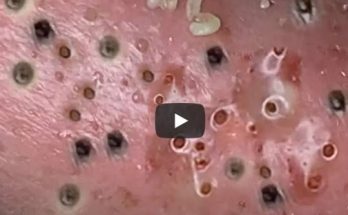
The two images presented offer stark visual evidence of complex and severe dermatological issues requiring immediate and professional attention. Both photographs depict skin lesions that go far beyond typical, mild acne and highlight the critical need for expert assessment, diagnosis, and treatment.
📸 Analysis of the Skin Conditions
The images collectively show several distinct, serious skin issues being examined in a clinical setting, as evidenced by the presence of a gloved hand, protective eyewear, and specialized medical equipment.
Image 1: Severe Inflammatory Acne and Post-Procedure Lesions
This image focuses on a highly inflamed area of the cheek or forehead, characterized by:
-
Severe Inflammation and Edema: The large, angry-looking red area indicates deep inflammation (swelling) associated with severe nodular or cystic acne.
-
Active Pustules and Cysts: Several yellowish-white, raised spots are visible, indicative of active pus-filled lesions (pustules or the surface of ruptured cysts).
-
Crusted/Oxidized Spots: The most striking feature is the clusters of dark, almost black, raised spots. These are likely:
-
Heavily Oxidized Comedones: Extremely large, dark blackheads.
-
Post-Procedure Crusting (Eschar): Crusts forming over small wounds following aggressive extraction, laser treatment, or electrocautery intended to remove the lesion’s contents.
-
-
Medical Intervention: The person is wearing protective eyewear, and an optical fiber or probe connected to a medical device is visible near the temple. This strongly suggests the patient is undergoing an active laser, light, or electrosurgery procedure for targeted lesion removal or inflammation reduction.
Image 2: Atypical Pigmented and Crusted Lesion
This image shows a different area of the face (likely the cheek near the nose) and features:
-
Solitary, Deep Lesion: A distinct, dark, crusted spot with a surrounding pale or slightly bluish halo (perilesional pallor or a ‘halo effect’).
-
Crusting (Eschar): The black, centralized crust suggests a lesion that has been previously ruptured, biopsied, or aggressively treated (like cryotherapy or electrocautery) and is now healing.
-
Complex Pigmentation: The dark color, irregular border, and unique presentation of this lesion make it atypical. While it could be a deep, resolving inflammatory lesion, this appearance warrants differential diagnosis to rule out more serious conditions.
-
Other Dark Spots: Numerous smaller, dark spots (possible tiny blackheads or sun damage) are visible on the upper cheek, showing a generalized tendency toward pore congestion and/or photodamage.
📢 Call to Action: The Necessity of Professional Care
These images depict conditions that are not suitable for self-treatment. They represent serious medical concerns that require the expertise of a board-certified dermatologist.
1. Diagnosis and Treatment Planning
-
Rule Out Serious Conditions (Image 2): Any solitary, dark, rapidly changing, or unusual skin lesion must be professionally examined. The appearance of the crusted lesion with surrounding discoloration necessitates a thorough evaluation and possible biopsy to rule out conditions like basal cell carcinoma, squamous cell carcinoma, or melanoma.
-
Manage Severe Acne (Image 1): Nodular and cystic acne can cause lifelong physical and psychological scarring. A dermatologist can prescribe systemic treatments (e.g., oral antibiotics, oral retinoids like isotretinoin) and perform in-office procedures (steroid injections, drainage, or targeted laser/light therapy) that are essential to halt the inflammatory process and minimize permanent damage.
2. Preventing Scarring and Complications
-
Safe Extraction: As suggested by the severe inflammation, aggressive or improper at-home extraction attempts significantly increase the risk of driving bacteria deeper, leading to more extensive, painful nodules and inevitable atrophic (pitted) or hypertrophic (raised) scars. Professionals use sterile, precise techniques.
-
Wound Care and Healing: For the lesions undergoing crusting (Images 1 and 2), proper post-procedure care is crucial to prevent secondary infection and promote optimal healing, thus mitigating post-inflammatory hyperpigmentation (PIH) and scarring.
3. Implementing Advanced Therapies
The equipment shown in Image 1 underscores the role of advanced dermatological tools. Therapies such as CO2 fractional laser resurfacing, specialized phototherapy, or controlled electrosurgery are not available in a non-clinical setting but are vital for both clearing active lesions and addressing existing scarring.
If you or someone you know exhibits skin conditions resembling those in the images—characterized by deep, painful inflammation, large crusted lesions, or atypical pigmented spots—seek immediate consultation with a dermatologist. Early, professional intervention is the only way to effectively treat the condition, prevent complications, and preserve skin health.
Would you like to find information on local dermatologists specializing in severe acne or skin lesion diagnosis?