🔍 Understanding Complex Acne Lesions and Professional Treatment
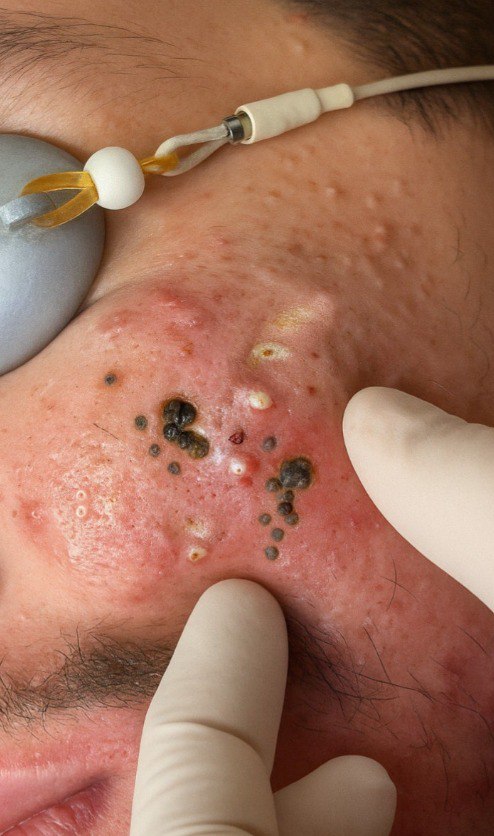
The image depicts a close-up of skin, likely on the face, showing severe inflammation and a cluster of various complex acne lesions, including large, deep cysts or nodules, and several dark, possibly crusting or heavily oxidized spots. The presence of a gloved hand and a medical device near the area suggests this is a patient undergoing a professional dermatological examination or treatment for a significant case of acne vulgaris.
This particular presentation highlights several different stages and types of acne, requiring careful assessment and intervention beyond standard over-the-counter treatments.
🦠 Identifying the Types of Lesions
The area of skin shown features a mixed morphology of acne, characterized by inflammatory and non-inflammatory lesions:
1. Severe Inflammatory Lesions (Nodules and Cysts)
The large, raised, red, and swollen areas suggest nodular or cystic acne.
-
Nodules: Are large, solid, painful lumps that form deep beneath the skin’s surface. They are caused by the deep rupture of the follicle wall, leading to inflammation that extends into the dermis.
-
Cysts: Are similar to nodules but are pus-filled and soft to the touch. This is the most severe form of acne and often leads to permanent scarring. The yellowish, raised, fluid-filled spots visible could be active pustules or the surface of deep cysts.
2. Comedones and Oxidized Spots
The prominent dark areas are particularly noteworthy. These could be:
-
Oxidized Blackheads (Open Comedones): Larger, deeply plugged pores where the top surface has oxidized, resulting in a dark color.
-
Crusting Lesions: The extremely dark, raised areas might also be healing or ruptured pustules/cysts that have clotted, oxidized, and formed a crust (eschar) over the open wound, possibly indicating a stage post-extraction or rupture.
🩺 Dermatological Interventions Suggested by the Image
The context of the photo—a gloved hand and an apparent medical device—points to specialized care necessary for managing this level of skin inflammation and deep lesions.
1. Pre-Treatment and Assessment
A dermatologist’s initial role is to grade the acne severity (Grade 4 or severe nodulocystic acne) and determine the course of action. Treatment for severe acne often involves a multi-pronged approach that includes systemic medication (like oral antibiotics or isotretinoin) combined with topical and procedural treatments.
2. Physical Extraction and Drainage
The manipulation of the area by the gloved hand suggests a procedure in progress, which may include:
-
Drainage and Excision: For large, painful cysts and nodules, a doctor may perform an incision and drainage (I&D) to remove the pus and debris, which can reduce pain and the risk of deep scarring.
-
Comedone Extraction: Removing heavily plugged blackheads, especially before other treatments like chemical peels or laser procedures.
3. Laser or Light Therapy
The white object with a cable and an attachment near the patient’s temple appears to be a handpiece from a medical device, possibly for laser, pulsed light (IPL), or photodynamic therapy (PDT).
-
Lasers: Can target the P. acnes bacteria, reduce inflammation, or even selectively destroy the sebaceous gland to reduce oil production.
-
Photodynamic Therapy (PDT): Involves applying a photosensitizing drug to the skin, which is then activated by a specific light source (like the device shown). This process can selectively target and destroy the oil glands and bacteria.
🩹 The Importance of Professional Care
When acne progresses to the nodular and cystic stage, self-treatment is highly discouraged for several critical reasons:
-
Risk of Scarring: Deep inflammation destroys collagen and elastin fibers, leading to permanent atrophic (pitted) or hypertrophic (raised) scarring. Professional drainage and proper medication are essential to minimize this damage.
-
Risk of Infection: Attempting to squeeze or pop deep cysts can push infected material further into the dermis, worsening the infection and inflammation.
-
Systemic Involvement: Severe acne often requires oral medications (e.g., isotretinoin, systemic antibiotics) that can only be prescribed and managed by a dermatologist due to potential side effects and required monitoring.
The image serves as a powerful reminder that while mild acne is manageable at home, severe inflammatory acne is a serious medical condition requiring the expertise and tools of a professional to treat safely and effectively.
Would you like to know more about the long-term treatment options for nodular and cystic acne?